World-first · 2014 pilot
Texas · Williamson & Travis Counties · CTRMA + TxDOT + TTI

The first HOV toll discount
verified by a smartphone.

In 2014, Carma launched the world's first real-world use of real-time ridesharing technology to verify vehicle occupancy for toll-road rebates — on the Central Texas Regional Mobility Authority's 183A corridor in north Austin. Federally funded. Independently evaluated by the Texas A&M Transportation Institute.

HOV · Austin · 183A · 2014
TX · BRC 1083 HOV · toll rebate
183A SB · Mobility Authority
Aug 2014 · 8:12 a.m.
Rebate credited
Verified 2-up carpool
+$1.50
Detections Map
1st
Smartphone HOV toll rebate · anywhere
2
Toll corridors · 183A & Manor / 290
183A
Launch corridor · north Austin
Why this mattered

No transponder. No camera. Just the phone in your pocket.

Tolling authorities had been pricing HOV access for years — but verifying it was the hard part. Roadside cameras, in-vehicle infrared, beam-break sensors: all expensive, all imperfect. Austin proved that two phones moving together, paired in real time, could verify a carpool to a standard a tolling authority would honour — and pay rebates against.

The grant
Federal Value Pricing Pilot.

An FHWA Value Pricing Pilot Program (VPPP) grant — awarded jointly to the Texas Department of Transportation, the Central Texas Regional Mobility Authority, and Avego Corporation (now Carma). Independent oversight by the Texas A&M Transportation Institute.

  • FunderFHWA · VPPP
  • AdministratorTxDOT
  • OperatorCTRMA
  • TechAvego / Carma
  • EvaluatorTexas A&M TTI
The rebate rules
50% off for 2 · 100% off for 3+.

Drivers carpooling along 183A or the Manor Expressway / Hwy 290 received toll rebates verified by Carma — without a roadside HOV lane. 2-person carpools received a 50% rebate on the toll; 3+ person carpools received the full toll back, reimbursed against their TxTag account.

  • HOV 250% toll rebate
  • HOV 3+100% toll rebate
  • PaymentTxTag reimbursement
  • Cost to ride$0.20 / mile · contributes to driver
  • Legal statusApproved by Austin City Council
How it worked

Detect. Pair. Rebate.

The Austin pilot ran the same coordinated-proximity verification that became the foundation of every Carma deployment since — applied for the first time to a live tolling reimbursement.

01
Detect.
A driver's phone enters the 183A geo-fence. The Carma app wakes and confirms passenger phones are co-present and co-moving — the live carpool check.
02
Pair.
When two or more registered Carmapoolers are paired through the trip, the app logs the trip as a verified HOV crossing of the toll gantry.
03
Rebate.
Carma matched the verified trip to the driver's TxTag account and reimbursed the toll — 50% back for an HOV-2, 100% back for an HOV-3+. No paperwork, no claim form.
Outcomes · August 2014

Five months in, fastest-growing program in the network.

After five months of community outreach in a single 3,000-home Austin neighbourhood — Block House Creek, off the 183A corridor — the Austin pilot was the fastest-growing program Carma had ever run. Membership along 183A was doubling month-over-month and more than a quarter of registered users were actively carpooling on the corridor.

1,400
Members
5,000
Passenger trips
35,900
Carpool miles
260
TxTags registered
$1,250
Tolls rebated
$2,150
Commute costs saved
1,700
Gallons of gas saved
33,500
lbs of CO₂ avoided

An independent evaluation by the Texas A&M Transportation Institute confirmed significant adoption and retention gains for users who qualified for the toll discount — the first real-world evidence that pricing plus smartphone verification could move SOV behaviour. CTRMA expanded the pilot from 183A onto the Manor Expressway / Hwy 290, and TxDOT discussed extending to SH 45 and SH 130.

“
This technology allows us to test the impact of specialty pricing as an incentive to drivers to use a toll Expressway, and may provide a way to verify the number of passengers in a qualifying carpool.
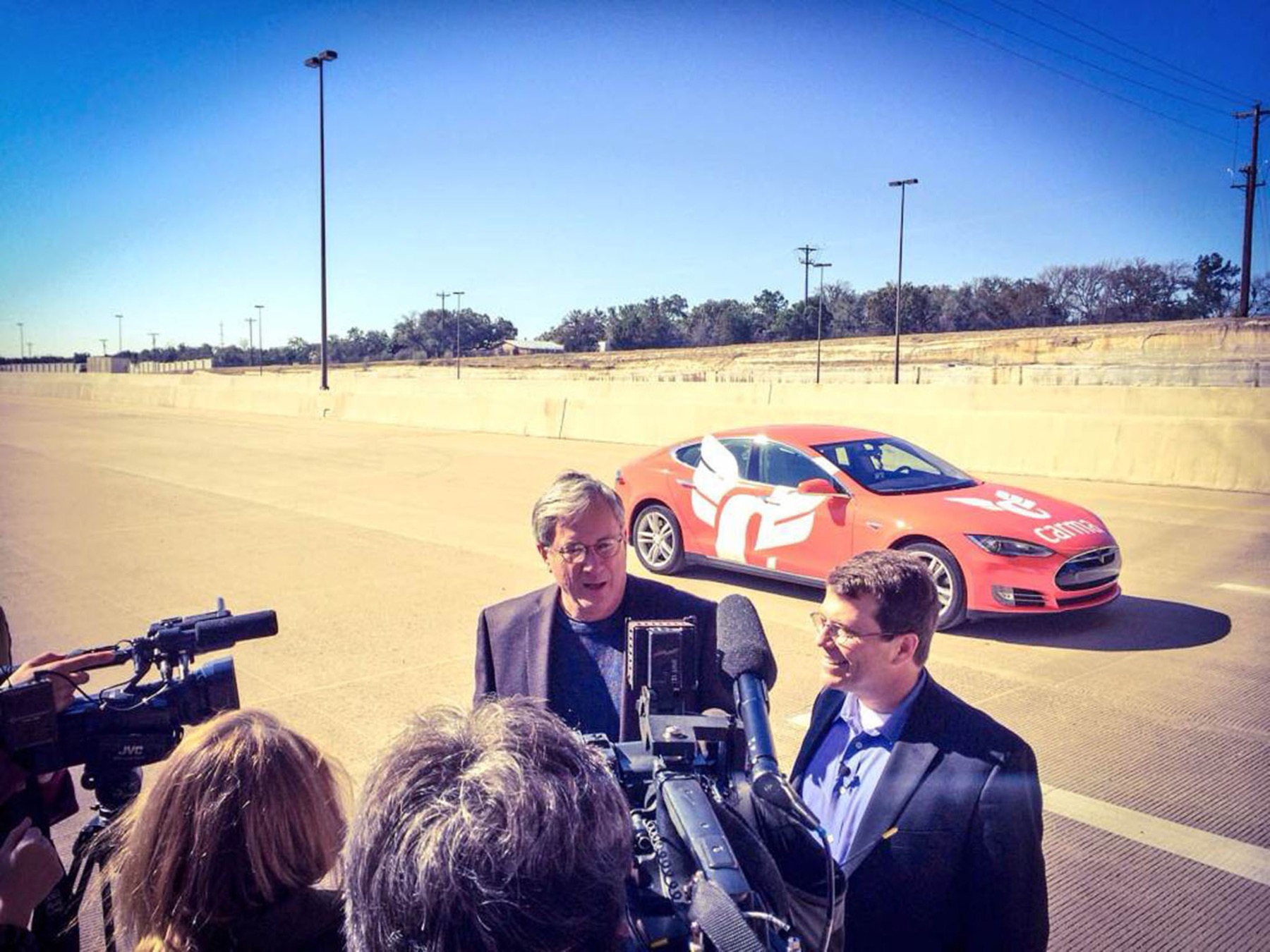
Mike HeiligensteinExecutive Director · Central Texas Regional Mobility Authority · Launch ceremony, 27 February 2014
Boots on the ground

A neighbourhood at a time.

The Austin pilot wasn't won with billboards. Carma's team focused on the Block House Creek neighbourhood — a 3,000-home community of long-haul commuters straddling the 183A corridor — and spent five months showing up where the residents already were.

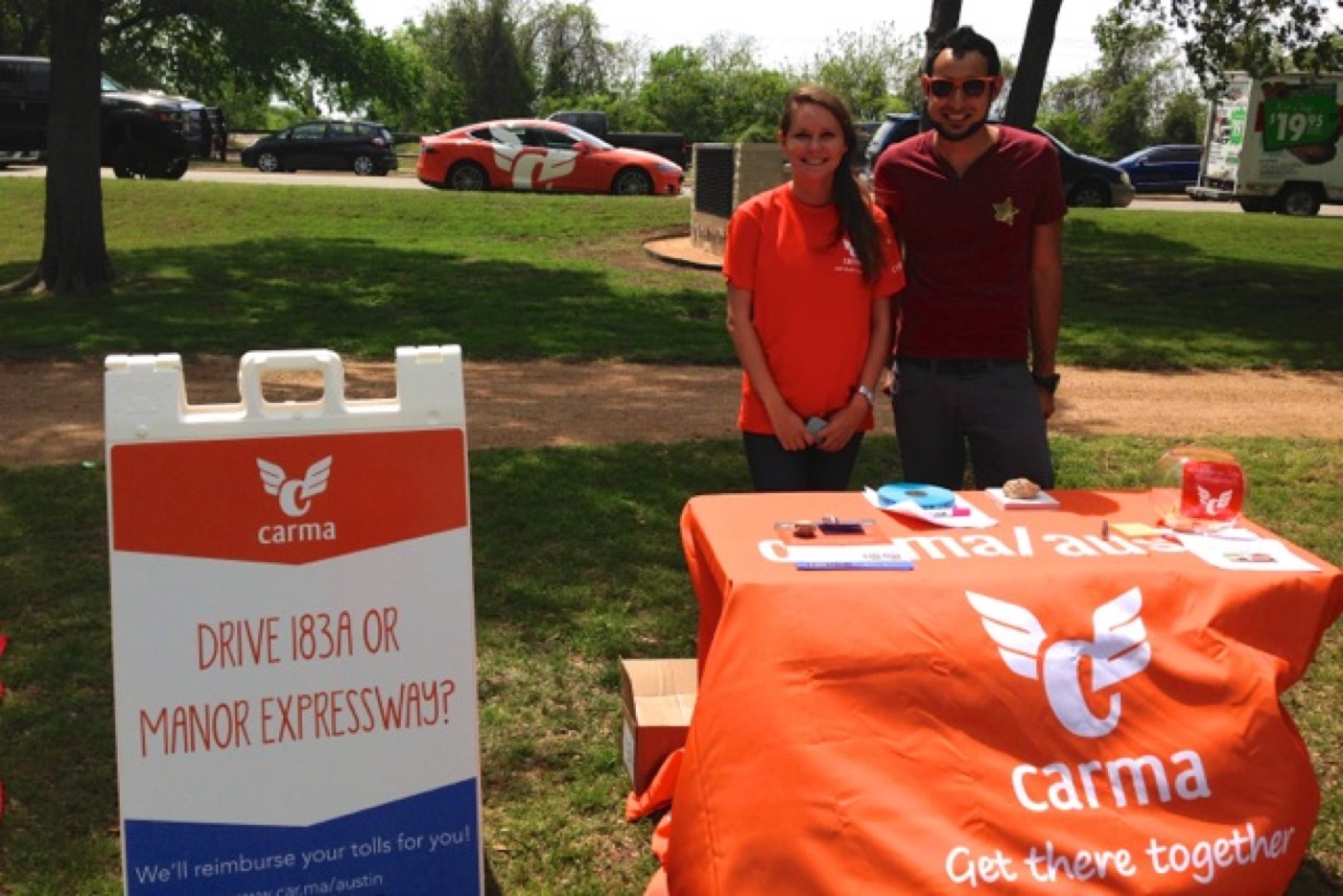
  • Cook-outsNeighbourhood block parties — pulled-pork from Boss Hogs Kitchen, sno-cones for the kids, two staffers in orange Carma shirts at a folding table next to the BBQ rig.
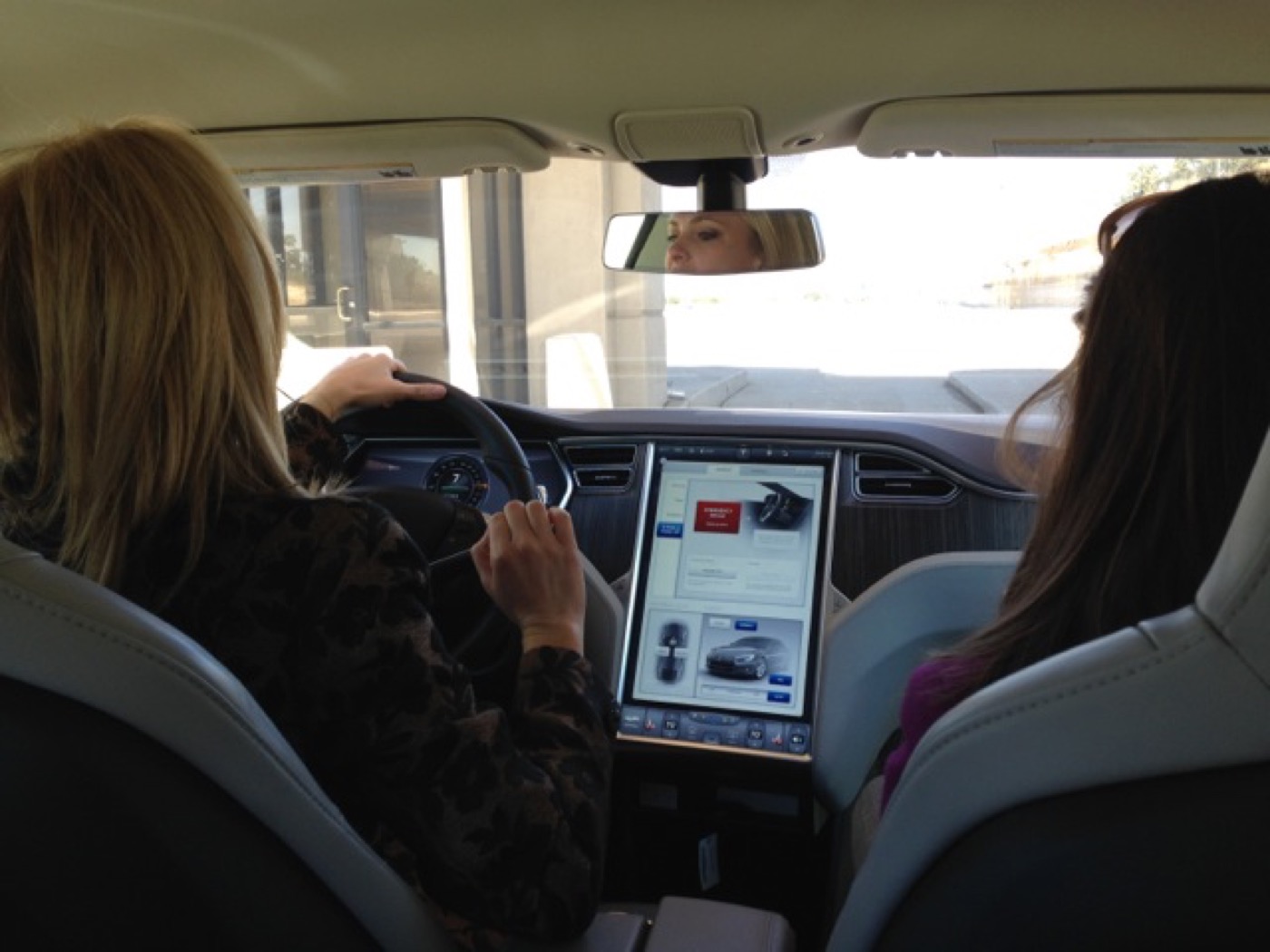
  • Ride-to-lunchLive demo rides from the Block House Creek park to a downtown food-truck park in the orange Carma Tesla — neighbours rode in the back seat watching the app pair their phones in real time.
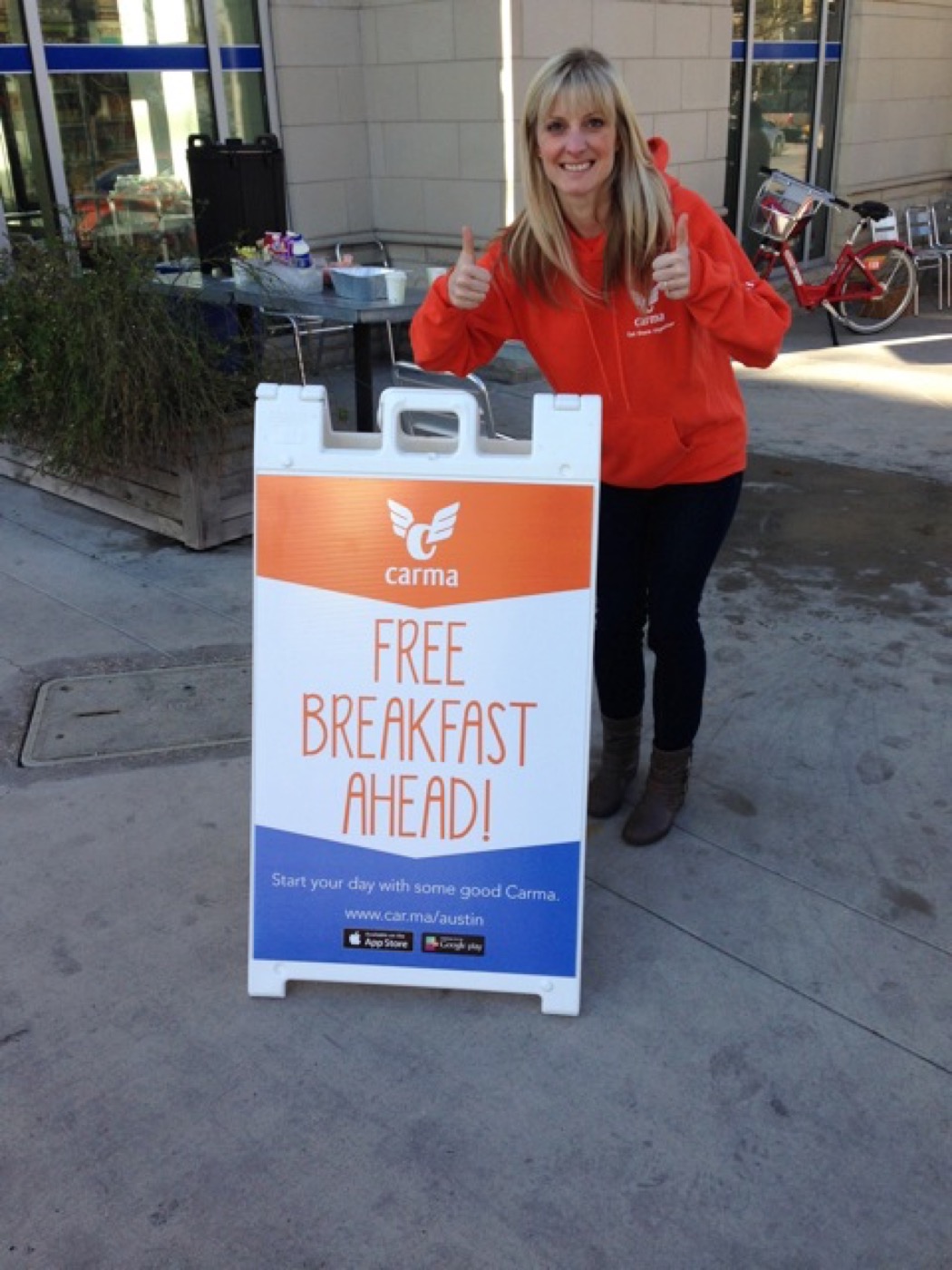
  • Campus eventsTabling at university and corporate campuses along the corridor — Free Breakfast Ahead signs, app-install giveaways, TxTag enrolment help on the spot.
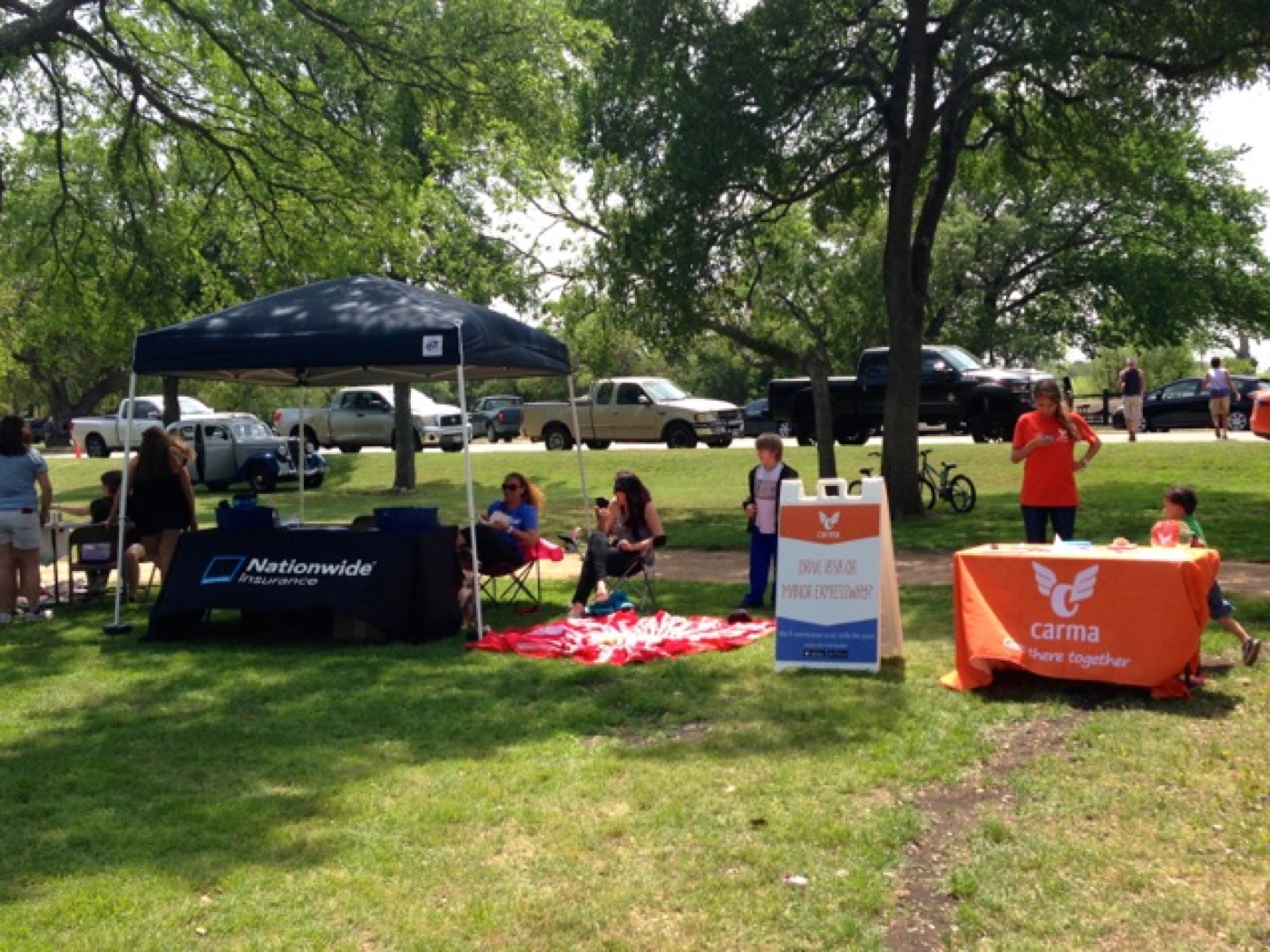
  • Co-marketingJoint outreach with Nationwide Insurance, Austin B-Cycle, Movability Austin, and the city's Local Bus & MetroRail networks — the Driving Wallet positioned alongside every other way of getting around town.
Carma team tabling at a Block House Creek neighbourhood event with a 'Drive 183A or Manor Expressway? We'll reimburse your tolls for you' yard sign and the orange Carma car in the background
From the launch week

The launch in pictures.

Press coverage · 2014

Covered top-to-bottom across central Texas.

The Austin launch was covered by the city's full media stack — broadcast, print, public radio, and the business press.

Austin American-Statesman KUT (NPR Austin) KVUE (ABC) KXAN (NBC) KEYE TV (CBS) Austin Business Journal Community Impact Newspaper The Austin Chronicle Movability Austin

Original PR Newswire release: Carma Carpooling Launches in Austin · 27 February 2014.

Twelve years on, the same verification runs every Carma deployment.