California · 9-County Bay Area

Where it all started.

The first ridesharing app on the App Store launched here in December 2008. The largest public-private rideshare partnership of its time ran across Sonoma, Contra Costa, and Marin. We gave drivers their tolls back across eight Bay Area bridges. And when BART went on strike, we helped MTC move the city. Carma did not begin in a lab, it began in the Bay Area, eighteen years ago.

Carpool · Bay Area · bridge toll
CA · 6PLD 429 Toll returned
Bay Bridge WB · Oakland → SF
7:48 a.m.
Credited in-app
Verified 2-up carpool
+$4.00
Trip events Route
2008
First ridesharing app on the App Store · December
9
Bay Area counties covered · co-marketed with 511
8
Tolled bridges · "you got your toll back"
What we built

The first real-time ridesharing community.

Neighbours and colleagues, forming carpools in real time, going the same way at commute time. Real carpools for real commutes — not short downtown hops. Convenient and flexible enough that people did it every day. Reducing congestion, reducing pollution, saving people time and money — before Uber, before Lyft. Launched on Apple's App Store in December 2008, the year the App Store opened.

The payment that made it work

Passengers paid drivers automatically, by distance travelled, settled in the app. Earnings were capped at the federal driving-reimbursement rate so drivers were sharing a cost, not running a taxi. That distinction is what made the trips legal carpools in every state and what made the matches stick day after day. The settlement engine, eighteen years on, is the same one we shipped that December.

→ As covered in the New York Times, December 21, 2008

The app, then

Match. Ride. Settle.

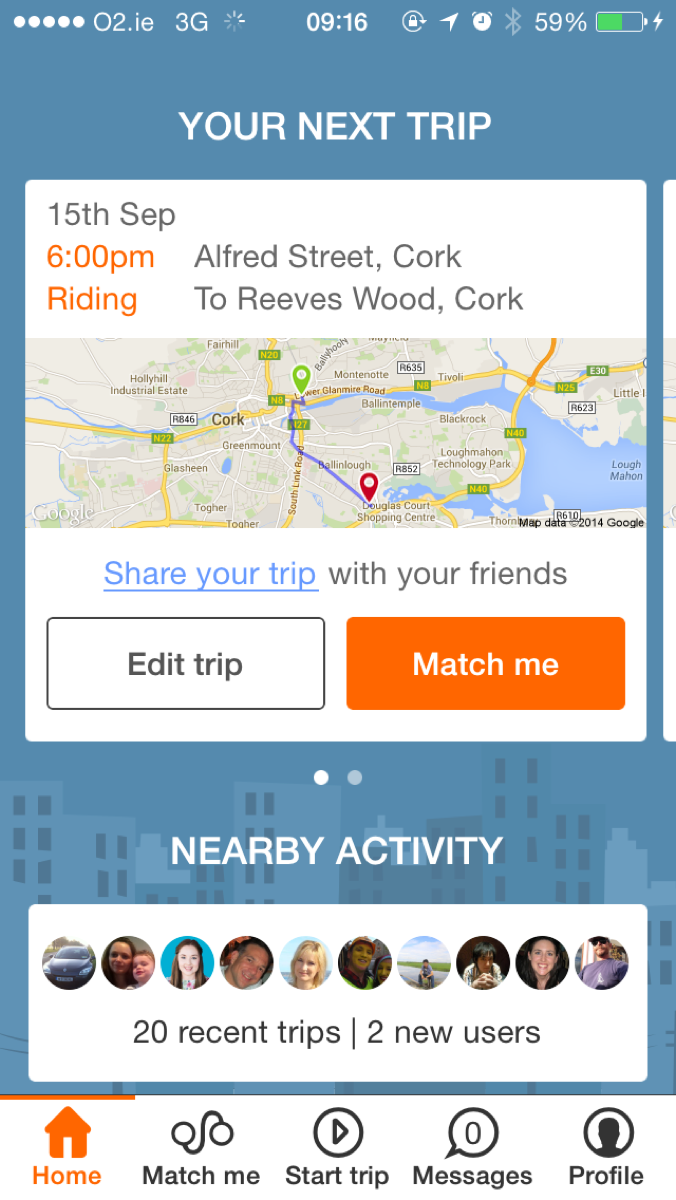
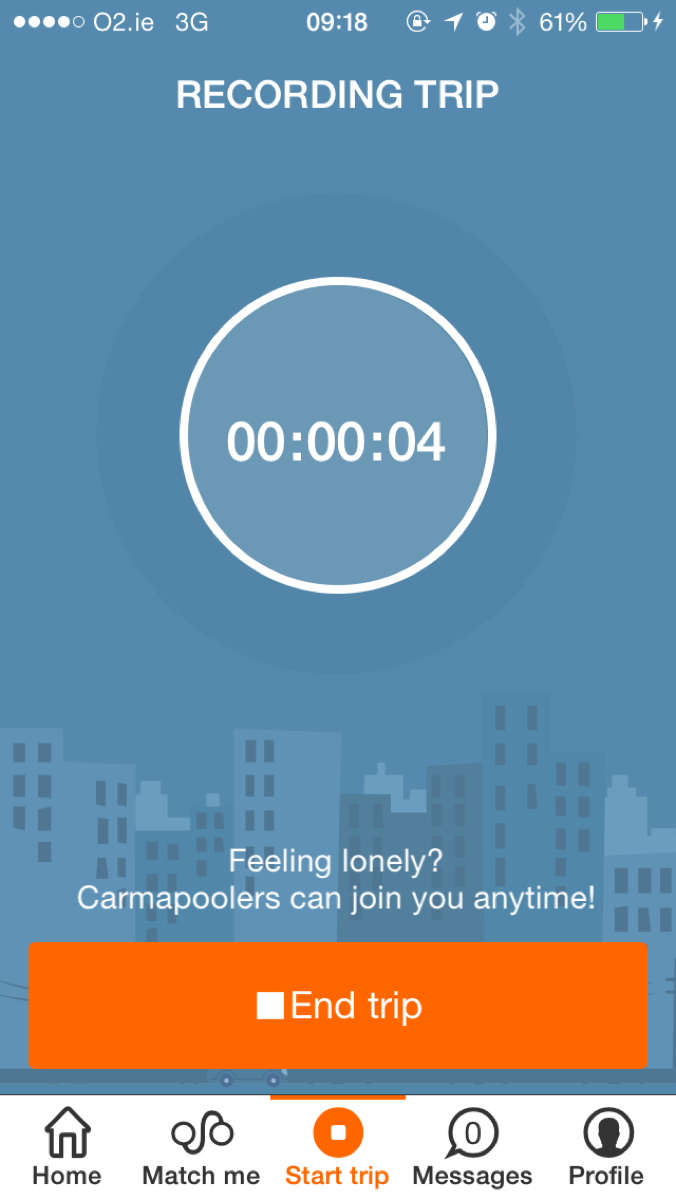
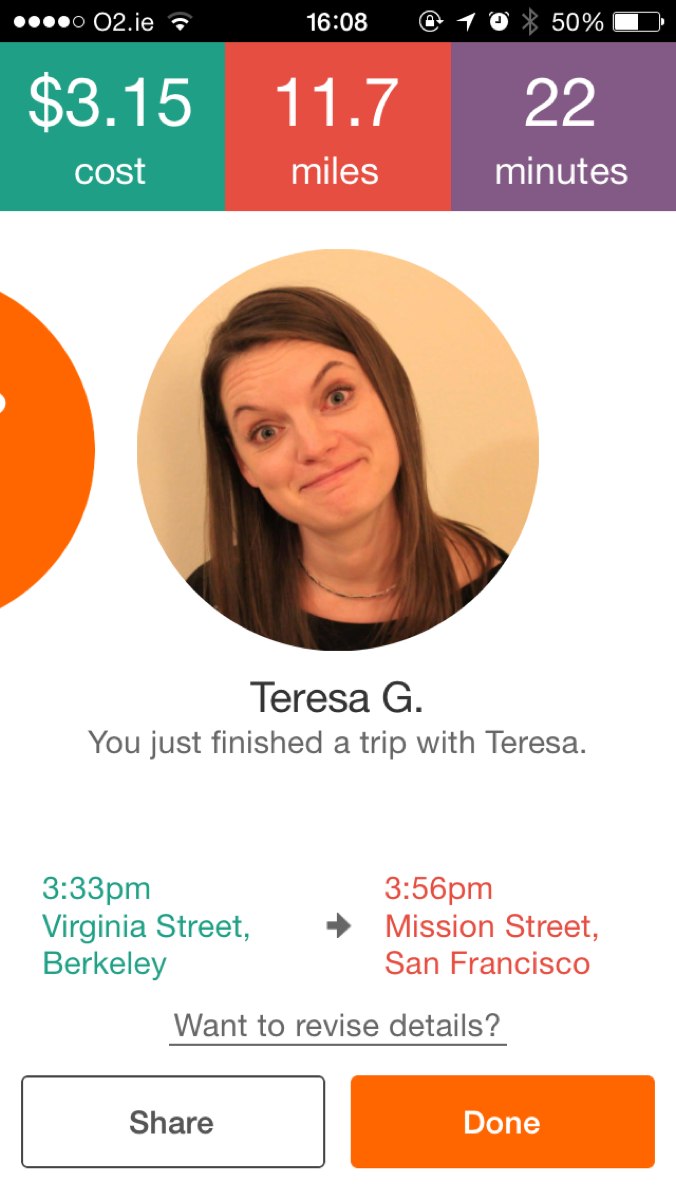
Three screens from the carpooling app, circa 2014 — the matching surface, an in-progress trip, and the completion handoff. Every transaction settled in-app, by distance, between two strangers who had just shared a ride to work.

Carma carpooling app — Your Next Trip screen showing a matched ride to Reeves Wood, with a Match me button
Match · Your next trip
Carma carpooling app — in-app activity screen
Ride · in progress
Carma carpooling app — trip completion screen showing a $3.15 cost, 11.7 miles, 22 minutes from Berkeley to Mission Street San Francisco with Teresa as the driver
Settle · $3.15 · 11.7 mi · Berkeley → Mission
In the press

Covered at the launch. Covered at the BART strike.

Selected coverage from the launch era (2008–2010) and the July 2013 BART strike — when MTC enlisted Carma four days before the strike began to transport up to 200,000 stranded commuters.

The New York Times
Novelties · the ride-sharing app that launched the iPhone era of carpooling
December 21, 2008 · launch coverage
The New York Times
Need a ride? There are apps for that
Felicity Barringer · January 20, 2011
Bloomberg TV
Beat the BART strike with Avego's ridesharing app
Emily Chang · July 2, 2013
USA Today
Interest in carshare apps surges after BART strike
Martha Mendoza · July 3, 2013
CNBC
Interest in carshare apps surges after BART strike
Martha Mendoza · July 3, 2013
Wall Street Journal
Single-occupancy cars grind SF Bay Area to a halt
July 2, 2013
CBS KPIX 5
App links commuters to open carpool seats
Sue Kwon · July 1, 2013
ABC 7 KGO
Ridesharing apps an option if BART workers strike
Jonathan Bloom · August 1, 2013
FOX 2 KTVU
Walnut Creek commuters prepare for the BART strike
Katie Utehs · June 28, 2013
Christian Science Monitor
San Francisco BART strike snarls traffic, drains $73 million a day
Akane Otani · July 2, 2013
Business Insider
A ride-share app is giving away helicopter rides during the SF transit strike
Alex Davies · July 3, 2013
Slate
Private helicopters: not just for obnoxious old rich people any more
Will Oremus · July 2, 2013
Xconomy
The antidote for strike stress: take Carma to work
Elise Craig · August 6, 2013
Tnooz
How a car ride-sharing company stepped in for a public-transport strike
Karthick Prabu · August 1, 2013
Real Business · Xerox
The modern carpool: how ridesharing is redefining the commute
November 18, 2013
Austin American-Statesman
Carpooling in Austin? There's an app — and a toll rebate — for that
Andra Lim · March 14, 2014
KUT News · Austin NPR
Cutting down on traffic with an app: Austin introduces Carma carpooling
Kelly Krupa · February 27, 2014
Press Democrat
App helps foster carpool connections
Matt Brown · February 4, 2014

And the research

Carma partnered with the UC Berkeley Transportation Sustainability Research Center on a peer-reviewed study of casual carpooling in the Bay Area — among the most comprehensive examinations of real-world ridesharing behaviour ever published.

→ Read the paper on ScienceDirect

Recognized by the industry

ITS America Smart Solution Spotlight Award · April 2010. Awarded to Avego (Carma's predecessor) for the real-time ridesharing platform underneath the Bay Area community.

The three-county program

Sonoma · Contra Costa · Marin.

In 2012, the Sonoma County Transportation Authority, Contra Costa Transportation Authority, and Transportation Authority of Marin won a $1.5 million CMAQ grant from the Metropolitan Transportation Commission to deploy real-time ridesharing at regional scale. Avego won the open technology RFP. The program ran 2012–2014 and became the basis for everything that followed.

$1.5M
CMAQ grant · MTC
Three-county program · Sonoma + Contra Costa + Marin
Tens of thousands
Carma users in the Bay Area
Cumulative riders across the regional program at peak
200,000
Commuters served · BART strike
Carma stepped in during the 2013 BART strike as MTC's emergency ridesharing partner
9
Bay Area counties
Carma + 511 Rideshare co-marketing across the full region
8
Tolled bridges · tolls returned
Carpoolers got the toll back in-app on every Bay Area bridge crossing
4×
Value vs. incentive in Contra Costa
$500 of program incentive recirculated as ~$2,000 of local value
The world's largest public-private partnership designed to reduce emissions and single-occupancy vehicle travel.

3-County Bay Area programSonoma + Contra Costa + Marin · funded by MTC · operated by Carma · 2012–2014

Crisis response · July 2013

The BART strike.

When the Bay Area Rapid Transit system went on strike in July 2013, the Metropolitan Transportation Commission picked up the phone. As many as 200,000 stranded transit riders would need to get to work. The MTC asked if Carma could help. The team had four days. What happened next put real-time ridesharing on national television.

Thursday
Bought BartStrike.com
Registered the domain commuters would search for. Stood up the matching interface that ran on it.
Friday
BART-ticket flyers
Printed informational flyers designed to look like BART tickets, distributed at stations across the Bay.
Sunday
Privately funded buses, vans & helicopters
Self-funded a fleet of buses and vans across the Bay to move riders who couldn't be paired with a private car. Plus a helicopter airlift for stranded commuters — promoted heavily on Bay Area radio.
Monday → Tuesday
Bloomberg · KTVU · CBS · KGO · Alice 97 · Times Square
The host of Alice Radio 97 in one of Carma's vans by Monday morning. National TV and radio coverage by Tuesday.
The bridge-toll badge

You got your toll back.

The Bay Area has eight tolled bridges, and California's bridge-toll policy refunds the toll to verified carpools. Most carpoolers never collected. The Carma app verified the carpool at the moment of crossing and returned the toll to the user automatically, with a small in-app badge that said exactly that. You got your toll back. The same software that today returns an HOV discount to a Dallas driver, returned the bridge toll to a Bay Area commuter in 2014.

"You got your toll back."

Eight bridges. Eight badges. One verified-carpool engine. The Bay Area's toll-return programme is where the architecture of "you carpooled, here is your money" was first built and shipped. It is the same verification that today, at much larger scale, drives the DFW TEXpress HOV discount.

Employer programs

Big employers. Real carpools.

Beyond county-level deployments, Carma ran targeted employer programs across the Bay Area. Large employers — including Agilent in the North Bay — used Carma to match employees into carpools for their daily commute, with verified ride-sharing logged and incentivized. These employer pilots became the design pattern that, years later, became the Toyota Plano deployment and the basis for the new enterprise channel.

North Bay · 2012-2014
Employer carpools.

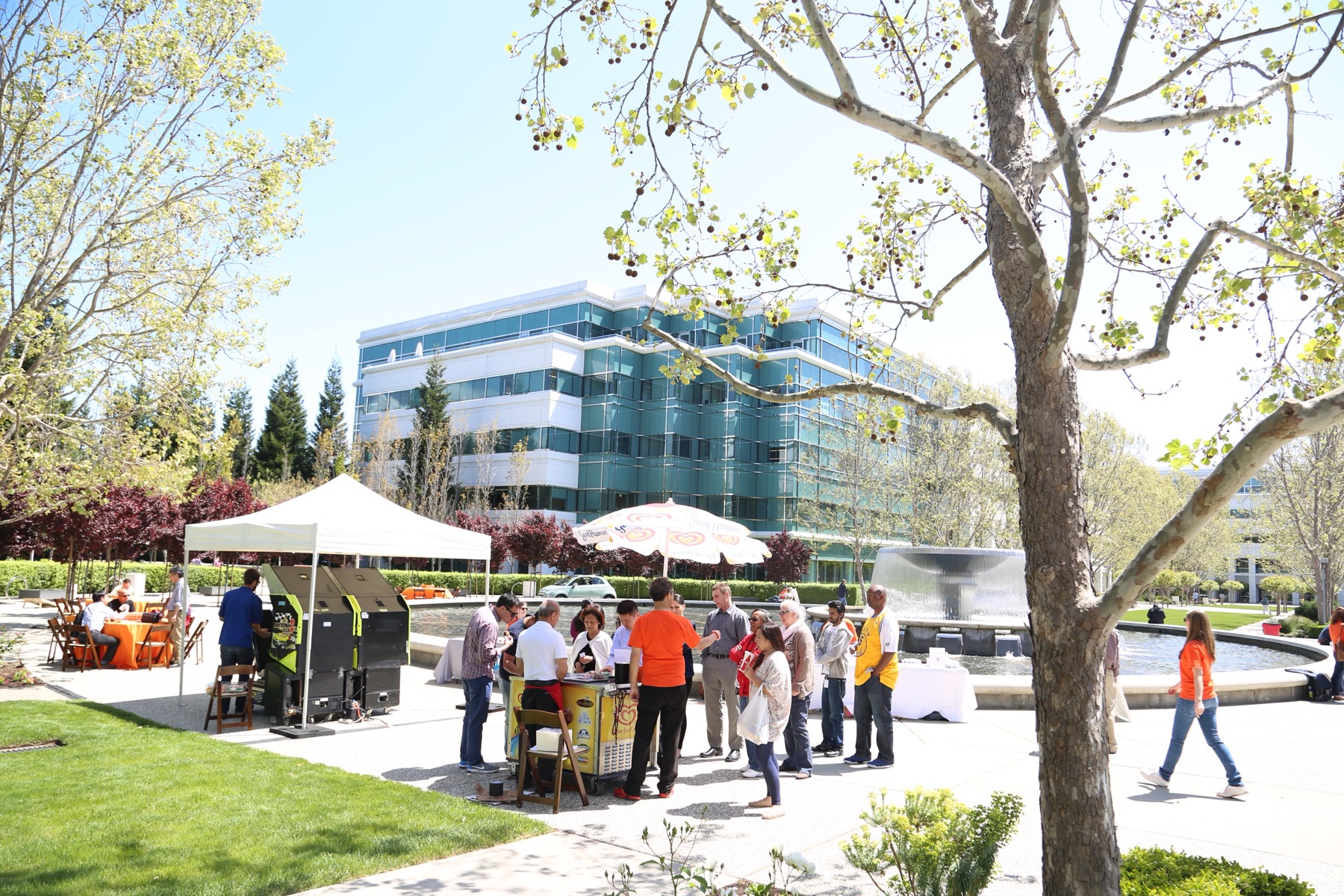
Worked with Agilent and other major North Bay employers to match employees into reliable, verified daily carpools. Carma ran the matching; the program ran on the ground through dense on-campus outreach — ride-to-lunch events, lobby tabling, manager briefings — building the daily-commute habit one employee at a time.

San Ramon · East Bay
Bishop Ranch.

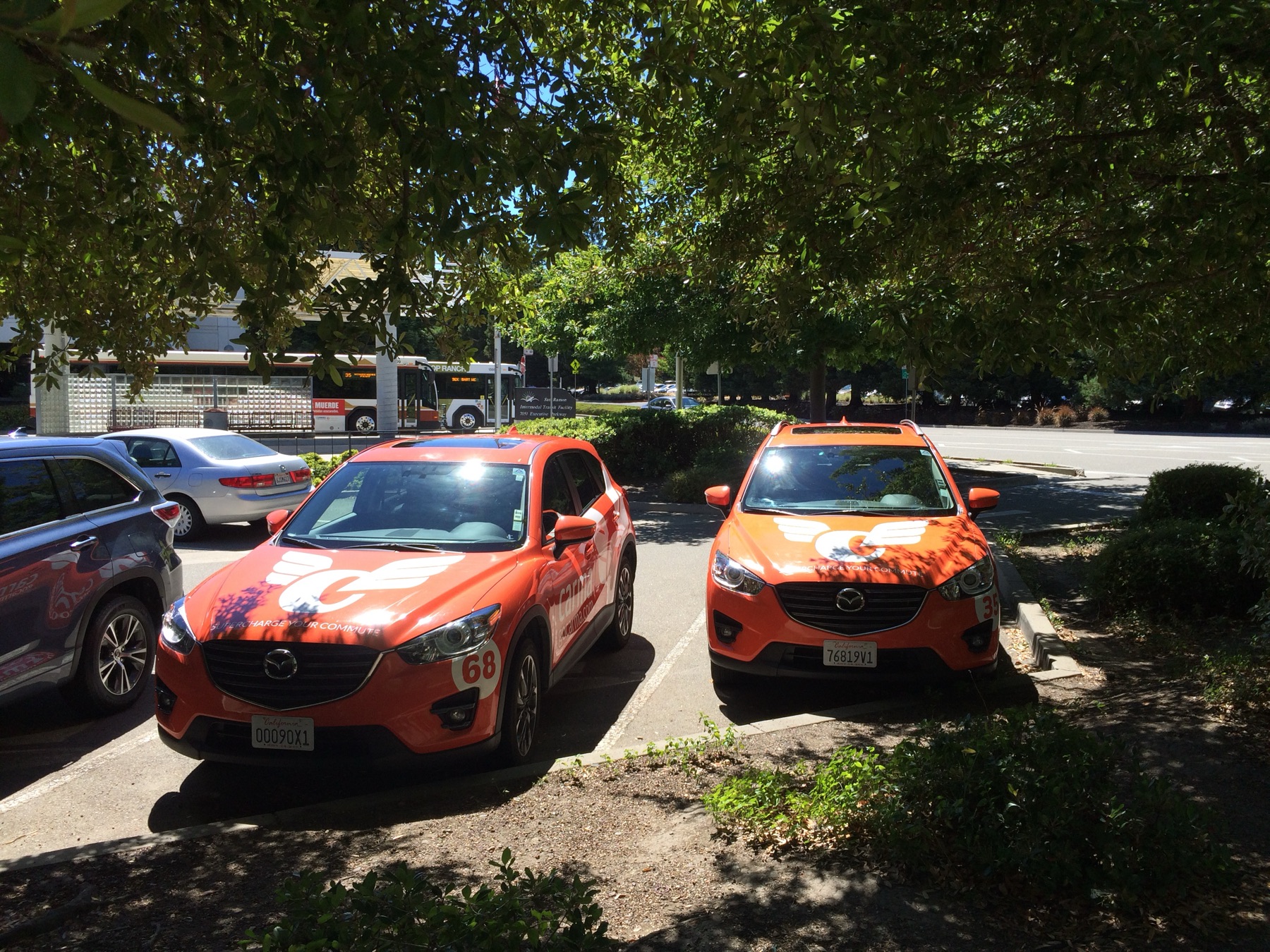
Real-time ridesharing live across the Bishop Ranch business park — neighbours and colleagues carpooling to and from the campus, matched in the app, settled by distance. The program later expanded into a dedicated fleet of orange Mazda CX-5 ride-or-drive vehicles stationed on-site that any enrolled commuter could book as the driver or the passenger. The same pattern shipped two years later as the Toyota Plano deployment.

Bishop Ranch · the orange fleet

Ride or drive. Either way, you commuted.

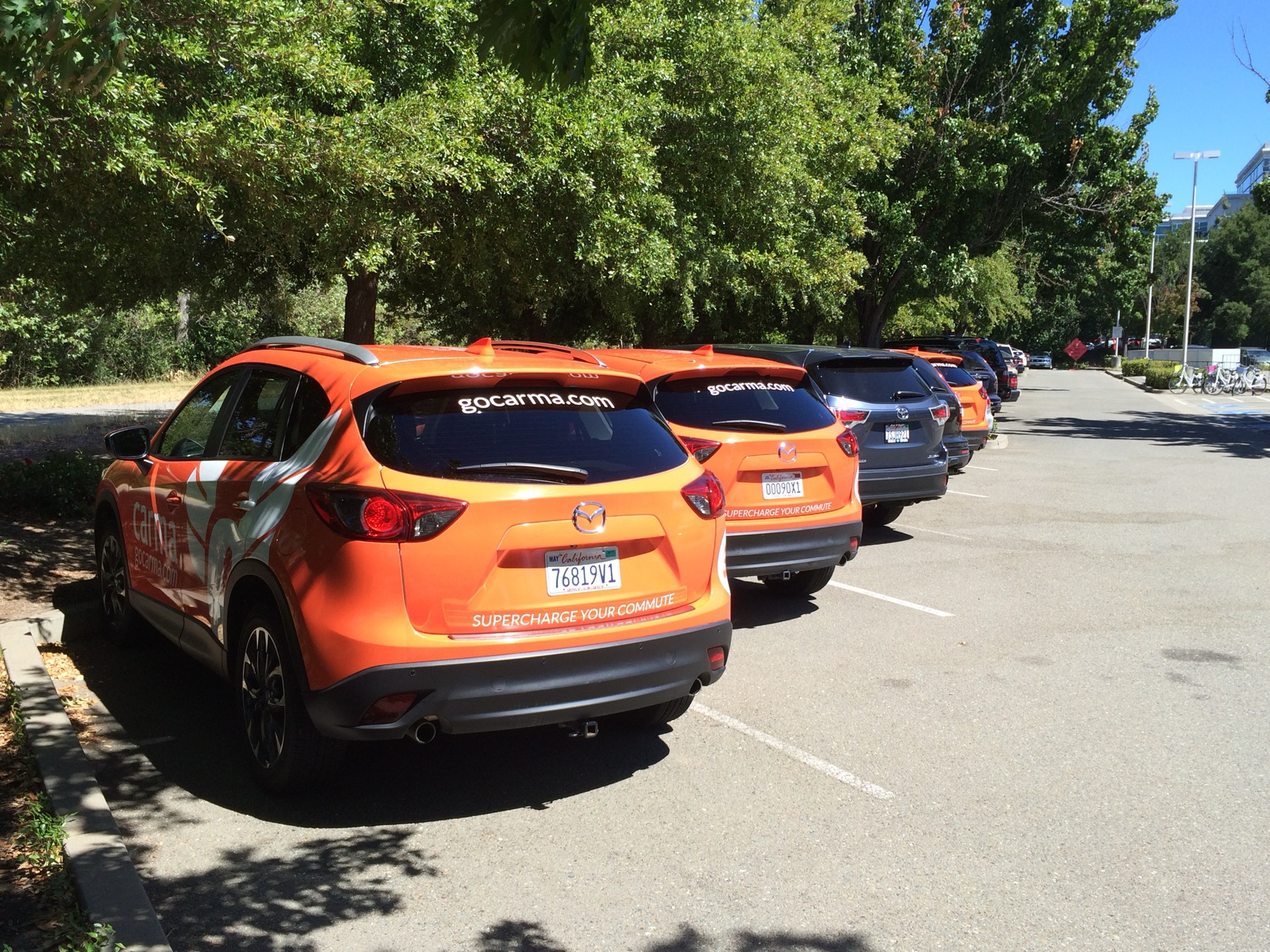
A dedicated fleet of Carma-branded Mazda CX-5s stationed at Bishop Ranch's transit centre. Any enrolled commuter could book one as the driver, picking up a colleague on the way in, or as a passenger when someone else was driving. Verified end-to-end by the app, settled in-app.

Two orange Carma-branded Mazda CX-5 vehicles parked at Bishop Ranch's transit centre
The ride-or-drive fleet at Bishop Ranch
A row of orange Carma Mazda CX-5s with 'gocarma.com · Supercharge your commute' branding
"Supercharge your commute" · transit centre, San Ramon
On-campus outreach event at Bishop Ranch — tables, umbrellas, employees gathered
On-campus outreach · daily commute habit, built employee by employee
From carpool to platform

The same engine, scaled.

Carma no longer offers public real-time ride-matching. The Bay Area is, today, the foundation under everything else we run. The matching engine became the verification layer. The "you got your toll back" badge became the HOV discount on the TEXpress lanes in Dallas–Fort Worth. The employer pilots became the Toyota deployment. The MTC partnership became the regulatory pattern under SBCTA's VMT Mitigation Bank. Every program we run today traces back to a verified shared trip on a Bay Area road.

Carpool verification → HOV discount

The Bay Area's verified-carpool engine became the architecture under Dallas–Fort Worth's HOV verification — 110,000+ users, 136,000 monthly verifications, violations under 2%.

Employer pilots → corporate channel

The North Bay and Bishop Ranch employer programs became the design pattern for the corporate VMT Bank and the Toyota Plano deployment.

San Francisco Bay Area · Retrospective

Read the Bay Area smartphone-mobility retrospective.

The 2010-era carpooling deployment, what we learned about smartphone-mobility at scale a decade before the rest of the industry caught up, and how it shaped the platform underneath GoCarma today.

Want to see what the Bay Area became?