California · San Bernardino County

Pay drivers for the solo trips they don't take.

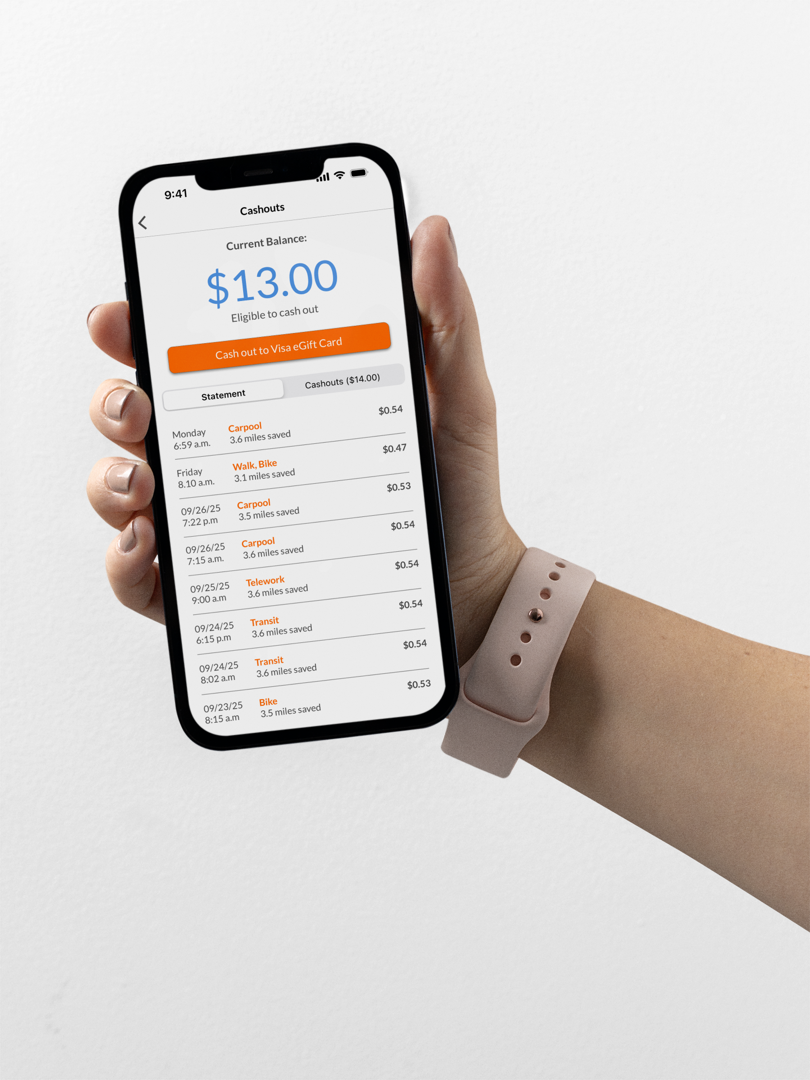
GoMoneyMiles is SBCTA's VMT mitigation bank for San Bernardino County, built with HNTB and verified by GoCarma. The wallet logs the trip a driver didn't make, by transit, carpool, bike, walk, or telework, and turns it into a verified credit. Developers and agencies buy those credits to offset the traffic impact of new projects, the same way they buy carbon offsets. It's the first VMT mitigation bank in the United States.
VMT Bank · San Bernardino
Metrolink · SB Line Transit verified
LA Union → San Bernardino–Depot
Yesterday · 7:14 a.m.
SBCTA mitigation credit
56 mi avoided
+$3.00
Trip events Route
Verified
Trip-by-trip, not modeled
Live
Operating programme · San Bernardino County
First
VMT mitigation bank in the U.S.
In partnership with
The concept

VMT, finally priced.

California's SB 743 requires every new development to mitigate its traffic — measured in vehicle miles traveled. For two decades that mitigation has been a paper exercise: scoping reports, transportation demand-management plans, modeled estimates. The San Bernardino VMT Mitigation Bank is the first place where developers buy verified VMT reduction the way they buy carbon offsets.

How a VMT Bank works

The supply side: drivers who reduce solo trips earn verified VMT-reduction credits, paid by the bank in real dollars. The demand side: developers and agencies purchase those credits to satisfy mitigation requirements for new projects. The market: matched, monitored, and audited by SBCTA — the regional transportation authority.

Trip-level verification is what makes a credit real. Without it, every credit is just an estimate. With it, every credit is a trip that didn't happen, measured, attributed, and settled.

The programme

Operational. Real money.

GoMoneyMiles is a live operating programme in San Bernardino County. Credits are earned on real trips and settled in real dollars. The system is paying rewards, generating credits, and growing both sides of the market in parallel.

Live
Participants in the field
Enrollment open across San Bernardino County
Real $
Rewards paid
Credits are earned on real trips and settled in real dollars
SB 743
Regulatory basis
California's VMT-mitigation requirement for new development
30-day
Baseline window
Rolling drive-alone trip count is the baseline against which reductions are measured
Trip-level
Verification granularity
The system sees individual trips, not modeled aggregates
100% digital
End-to-end
Enrollment, verification, and reward all in-app
How it works

A credit is a trip that didn't happen.

Every credit in the SBCTA bank traces back to a specific trip the wallet would have logged — and didn't. That's the difference between this market and the modeled-mitigation systems it's replacing.

01
Baseline.
The wallet observes the participant's drive-alone trip pattern for a rolling 30-day baseline. Privacy-by-design — only mode-classified trips are reported.
02
Reduce.
When a participant takes a trip by transit, carpool, bike, walk, or telework, the wallet records a verified reduction against their baseline.
03
Credit.
Verified reductions become credits the bank pays out. Developers and agencies buy those credits to satisfy their own VMT-mitigation obligations.
The partners

Three sides of the market.

SBCTA

The San Bernardino County Transportation Authority — the regional transportation agency operating the bank. They run the market, set the rules, audit the supply, and certify the credits.

HNTB

The engineering and program-management partner who designed the bank's economics, business rules, and regulatory framework. HNTB makes sure the credits hold up to CEQA scrutiny.

GoCarma

The verification layer. Every trip, every reduction, every credit traces to the GoCarma app's trip-level data. That's what turns the bank from a modeling exercise into a market.

The road ahead

Scale supply, build demand, certify the credits.

The programme is live. The path from here is straight: scale the supply side with more participants generating more credits, build the demand side with developers and agencies as steady buyers, and certify the credits at a level state and federal regulators can accept as mitigation currency.

Scaling supply

Enrollment expands across San Bernardino County. The verification model is the same; volume scales with onboarding.

Building demand

Developers facing SB 743 mitigation requirements are the natural buyers. The bank is the first place where they can satisfy mitigation with verified trip reductions rather than modeled estimates.

Inside the wallet

What participants see.

Three views from the live SBCTA VMT Bank participant app — the commute logger, a credit-earning trip, and the rolling earnings tally against the baseline.
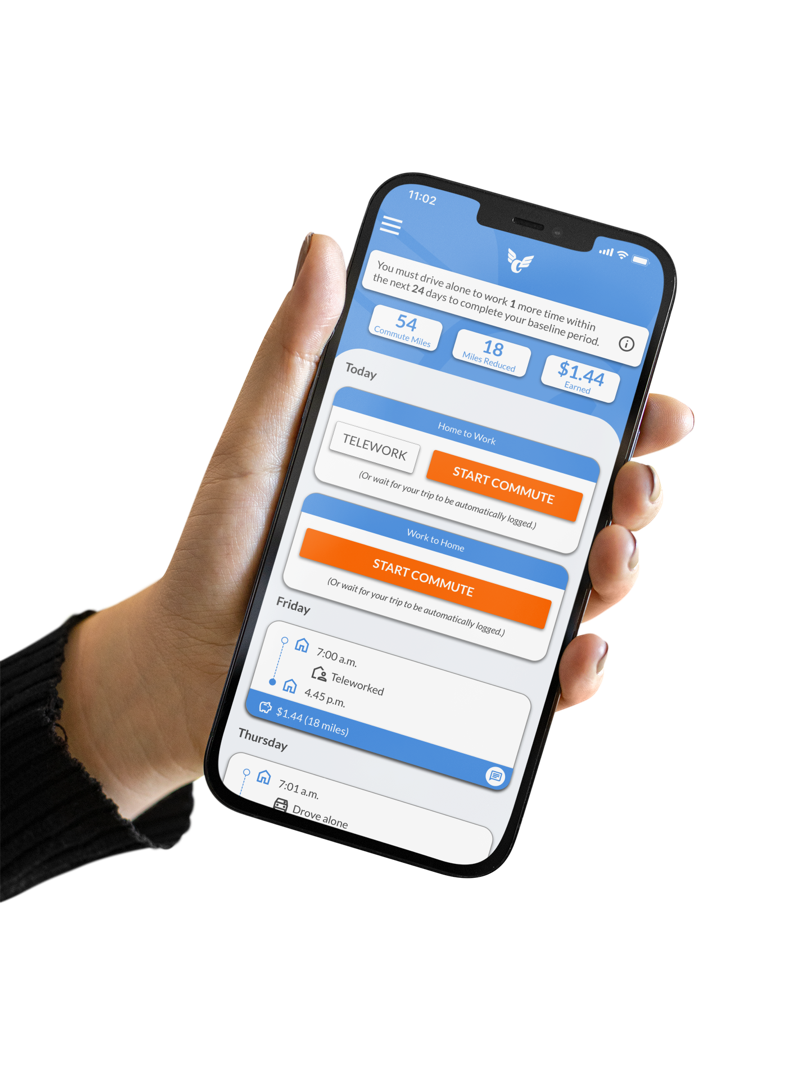

SBCTA VMT Bank app — commute logging interface showing telework and start commute options
Log · telework or commute
SBCTA VMT Bank app — earnings tally and baseline tracking
Earn · vs. baseline
SBCTA VMT Bank app — held in hand, daily trip history
Track · day by day
San Bernardino · Case study

Read the full SBCTA VMT Bank case study.

Three-week deployment with HNTB and SBCTA, the mode-shift rewards architecture, baseline-and-bank methodology, and what an MPO actually needs to run a verified-mileage program at scale.

Could a VMT bank work in your region?