The Driving Wallet, configured for an employer. Detect every commute on the employee's phone. Verify it. Credit it. Pay it out in 1,000+ ways — debit card, virtual Visa, or any major brand gift card. Run the same software that runs the world's largest smartphone HOV system at Dallas–Fort Worth, and the live VMT Mitigation Bank at SBCTA.
GoCarma Enterprise lands inside three distinct corporate pains. Same product, same architecture, same payout rail — three different buyers, three different headlines.
Parking is the most expensive square footage on your campus. Every space avoided is buildable land, capital saved, or tenant space rented. This is the door for Apple-Park-style HQs, Microsoft-Redmond-style campuses, Toyota-Plano-style consolidations — anywhere parking demand is the active constraint.
A new campus generates community pushback over traffic impact. Sustainability and Public Affairs need measurable, defensible mode-shift in the surrounding community — not just inside the badge gate. This is the door for HQ2-style builds, large fulfillment centres, and any campus build triggering CEQA/NEPA pushback.
Rule 2202 requires every 250+ employee LA-Basin worksite to operate an Employee Commute Reduction Program — and meet an Average Vehicle Ridership target, or buy AQIP credits. Most ECRPs run on annual surveys that are self-reported, low-response, and indefensible to a regulator. We replace the survey with measured, verified, continuous evidence.
Urban parking spaces carry costs in the tens of thousands of dollars per stall, per year. Every new corporate campus negotiates traffic mitigation with the city it's built in. Every sustainability report counts commute miles toward Scope 3. The traditional answer — paper TDM plans, modeled estimates, employee surveys — is the slowest, least credible part of any of those conversations.
A turnkey commuter-reward program operated on the same Driving Wallet that powers our agency deployments. Employees enrol in minutes. Smartphone sensors verify every commute. Credits accumulate in an in-app wallet. Payouts settle through Tremendous — debit card, virtual Visa, or any of 1,000+ brand gift cards. No hardware to install. No paperwork to file.
An employee drives 4.2 miles from home to the Parker Road station, parks, takes the DART Red Line into the city. The wallet sees both segments. The drive earns nothing — that's the point. The DART portion earns a per-mile credit. Payout is instant on verified VMT reduction — or held for corporate approval, if your program requires it.
Why this matters for your campus. Every Toyota employee who takes DART instead of driving full-route saves their employer a parking stall, removes a car from the morning peak around the campus, and creates an audit-grade VMT-reduction record for sustainability reporting. The reward is the lever that makes the shift happen.
Every reward decision starts with a verified mode. The wallet classifies each leg of every commute using signals that already exist on the phone — GPS, motion sensors, BLE proximity, real-time GTFS feeds — without asking the employee to self-report anything.
Privacy by design. Only the classified mode and the verified delta leave the phone — never the raw location history. The eligibility engine sees that an employee took a 12-mile transit trip; it never sees the route, the stops, or the platform photographed in passing.
Every credit lands in the employee's in-app wallet — a real, auditable balance. When they choose to cash out, they pick from over 1,000 options on the Tremendous payout rail: debit card, virtual Visa, any major brand gift card, or a charity donation.
Employees self-select payouts. We don't promise a closed-loop refund — but for a corporation that operates a consumer-facing retail business, a meaningful share of incentive dollars flows back into your sector through brand-gift-card payouts. Every dollar Starbucks spends on this program is dollars their employees can elect to receive as Starbucks credit. The economics are favourable for retail buyers in a way they are not for non-retail buyers.
No bank account? No problem. Virtual cards and gift cards cover the unbanked. International coverage varies by payout type — we confirm per market.
GoCarma Enterprise is a finance-team-friendly system. Every dollar that leaves the program is rule-bounded, audit-logged, tax-compliant, and visible in real time. Configure once, monitor continuously, never get surprised at the end of the quarter.
Per-employee caps. Per-program caps. Per-pay-period, per-week, per-day. Aggregate program budget ceiling. The wallet rejects any payout that would breach a cap — no manual policing, no end-of-month surprises.
The same verification stack that defends live HOV toll discounts at DFW — coordinated proximity, motion profile, speed, route shape, trip duration — runs on every corporate payout. Flagged trips never become credits. The strongest part of the product.
W-9 collection is built into the employee enrolment flow at the relevant payout threshold. 1099 generation is handled by Tremendous. You stay on the right side of IRS reporting rules without your payroll team building any of it themselves.
Most payouts settle instantly on verified VMT. For cohorts, amounts, or programs that need a manual review, configure an approval gate — by employee tier, by payout size, by program. The corporation chooses the policy.
The admin dashboard updates continuously: enrolled, active, weekly active commuters; verified trips; mode share; VMT avoided; CO₂ avoided; dollars credited, in wallet, disbursed. Cohort views by office, team, or ZIP — opt-in and aggregated for privacy.
Per-mode rates. Daily / weekly / period caps. Eligibility windows. Seasonal bonuses (e.g. double credits during Bike-to-Work Month). Home and worksite definitions. SSO and HRIS integration. White-label branding. You configure the program; the wallet runs the program you configured.
Audit-ready by default. Every credit, every payout, every rule change is logged with a timestamp and the user who made it. Export to CSV, PDF, Scope 3 line item, or SCAQMD Rule 2202 ECRP-compatible trip log — for your sustainability filings, your finance team's quarter close, or an inspector at the door.
Every employee-commute program before this one ran on self-reported data, modeled estimates, or expensive hardware nobody wanted to install. The Driving Wallet is the first system that verifies modes trip-by-trip, on phones employees already carry, with audit-grade defensibility. That's the difference between a wellness benefit and a measurable mitigation.
GoCarma Enterprise is not a pivot. We have been running real-time ridesharing pilots at large employment campuses across the United States, Ireland, and Norway for over a decade — three continents, three regulatory contexts, three commuter cultures. The two best-documented pilots in that body of work are Toyota's North American HQ in Plano, Texas and Bishop Ranch in California's East Bay — both 2017.
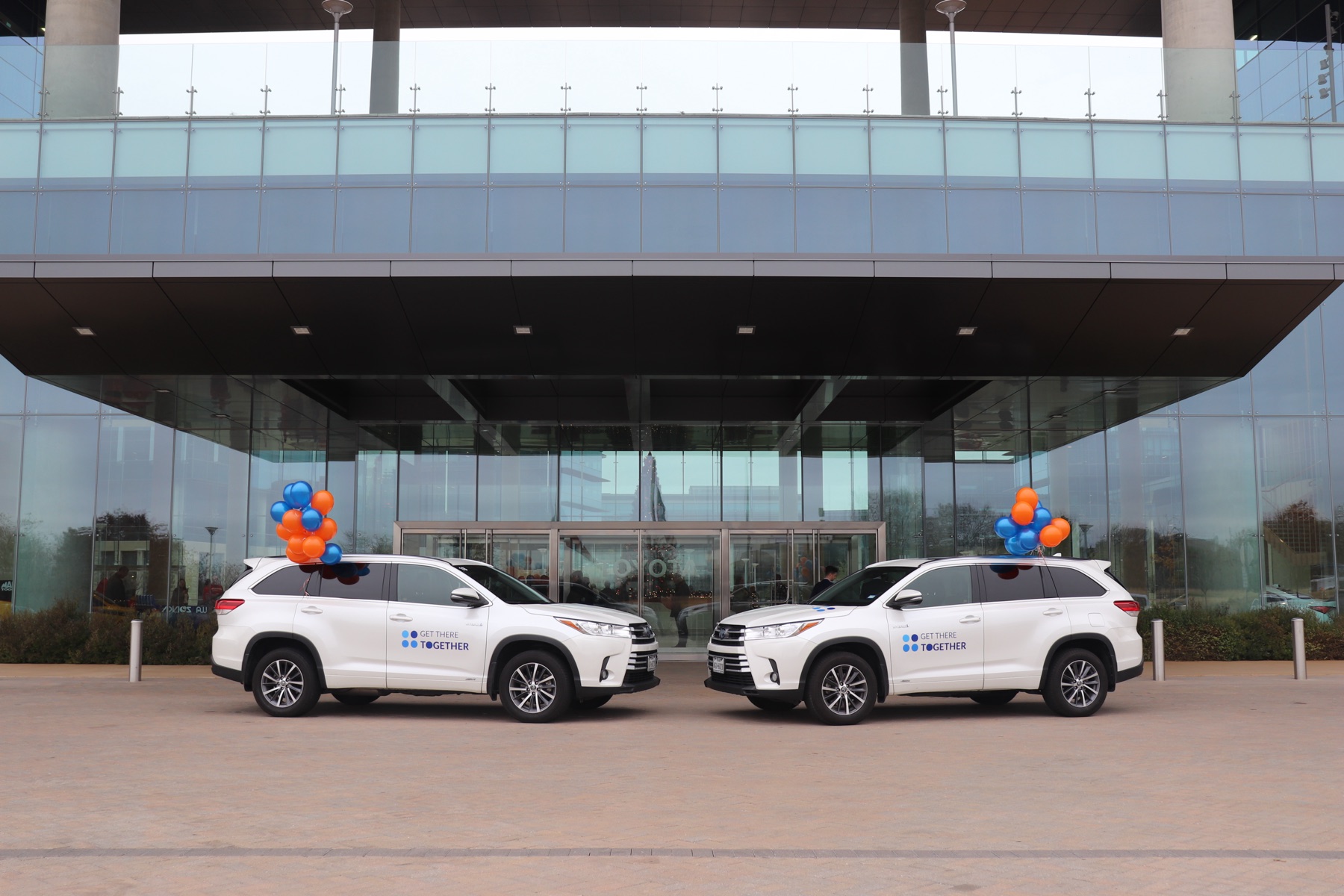
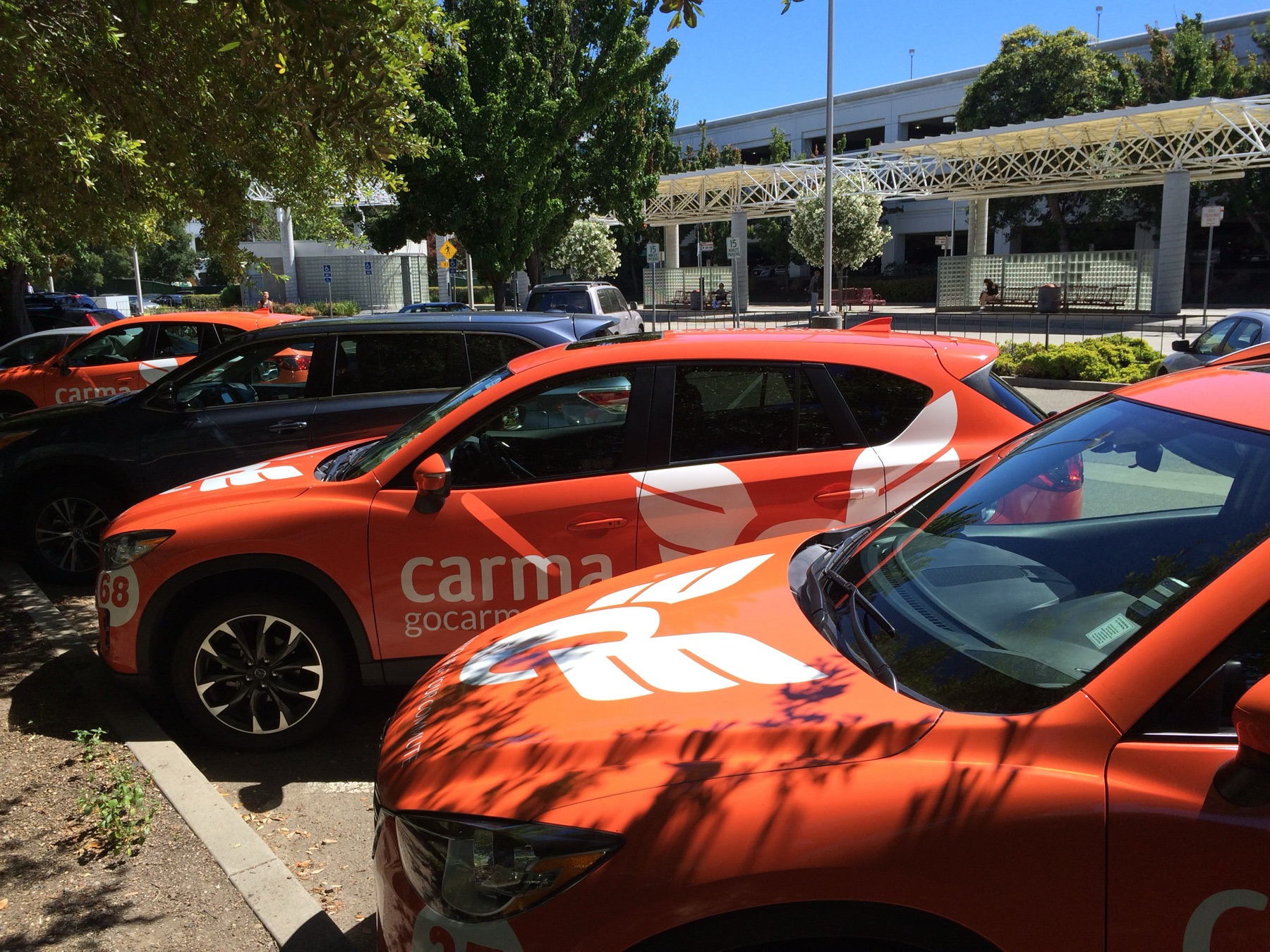
A fleet of 30 Toyota vehicles, parked across Dallas–Fort Worth, available to Toyota employees as a single shared resource. Employees booked a seat in the app — as a driver or as a passenger — and the same fleet served peak commutes and midday errands. One booking layer, one verification layer, one wallet.
"By working with Carma, we're being innovative to the mobility culture of Toyota." — Jennifer Zimmerman, Toyota
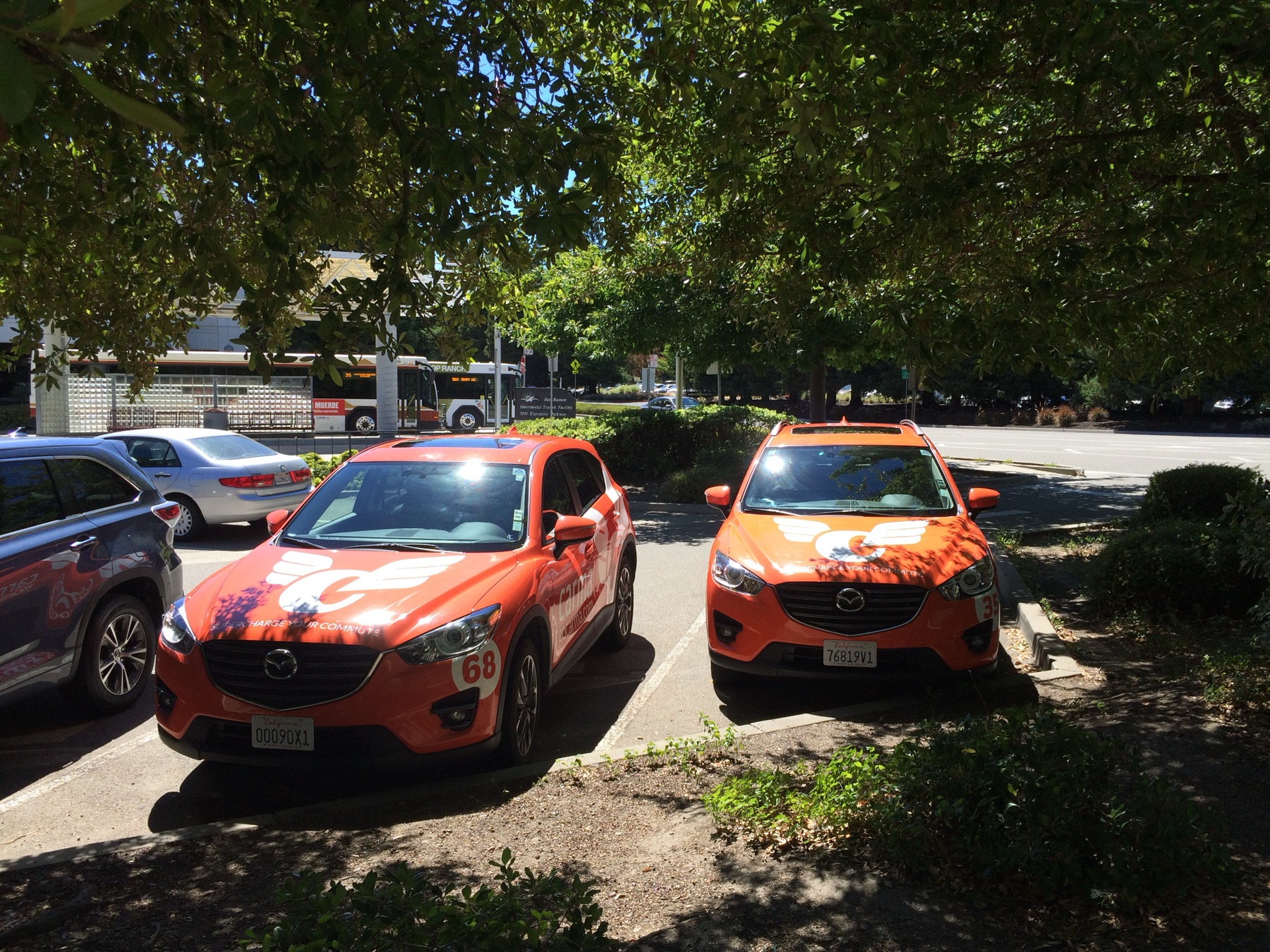
The precedent pilot at the Bishop Ranch business park in California's East Bay. Demonstrated the dual-mode (commute + carshare) model that became the Toyota deployment. The proof point underneath everything in the corporate channel.
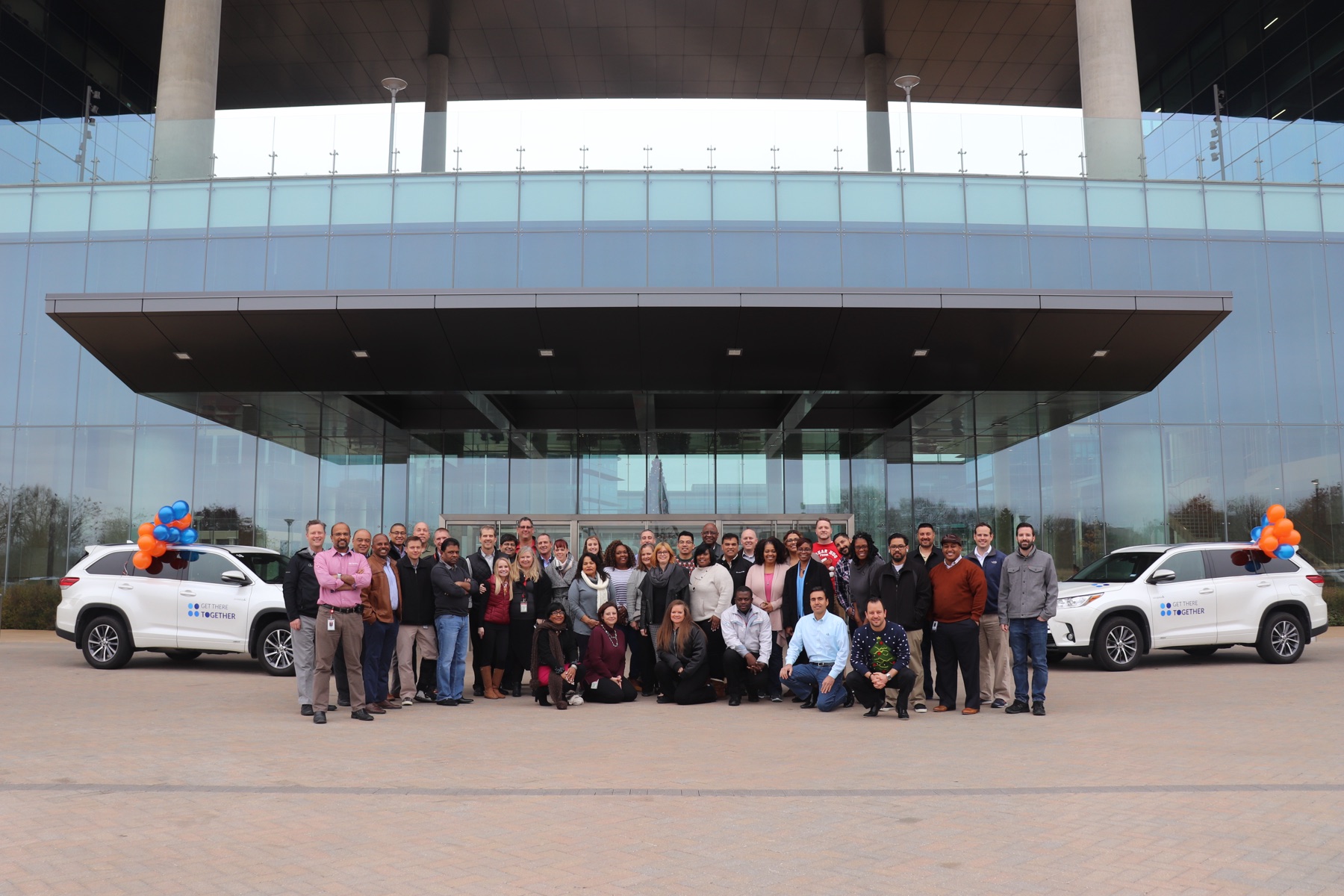
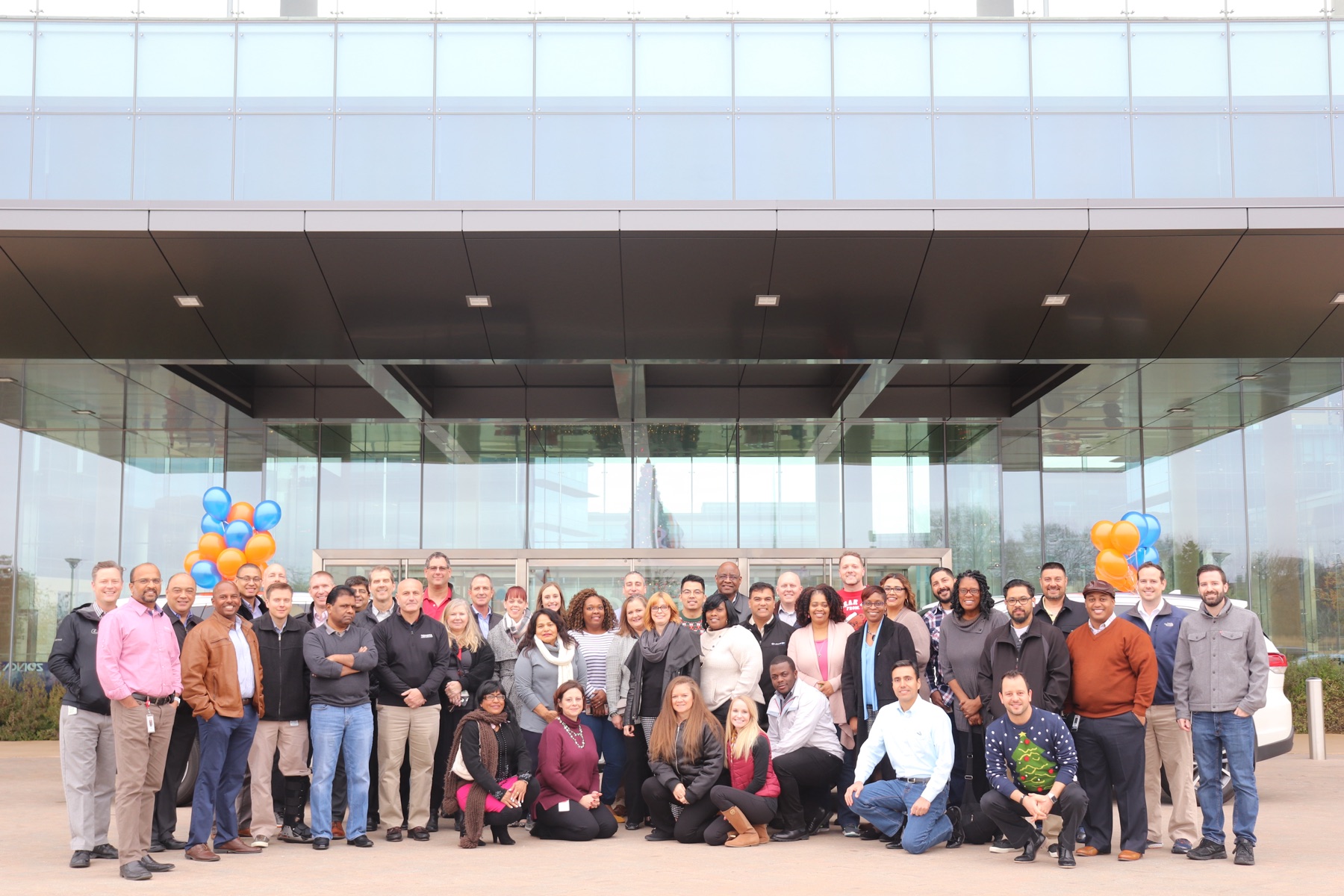
Toyota's North American headquarters in Plano, Texas — the day the GoCarma service went live for employees. A 30-vehicle fleet parked across Dallas–Fort Worth, bookable from the app as a driver or passenger, and the architecture that became the Driving Wallet.
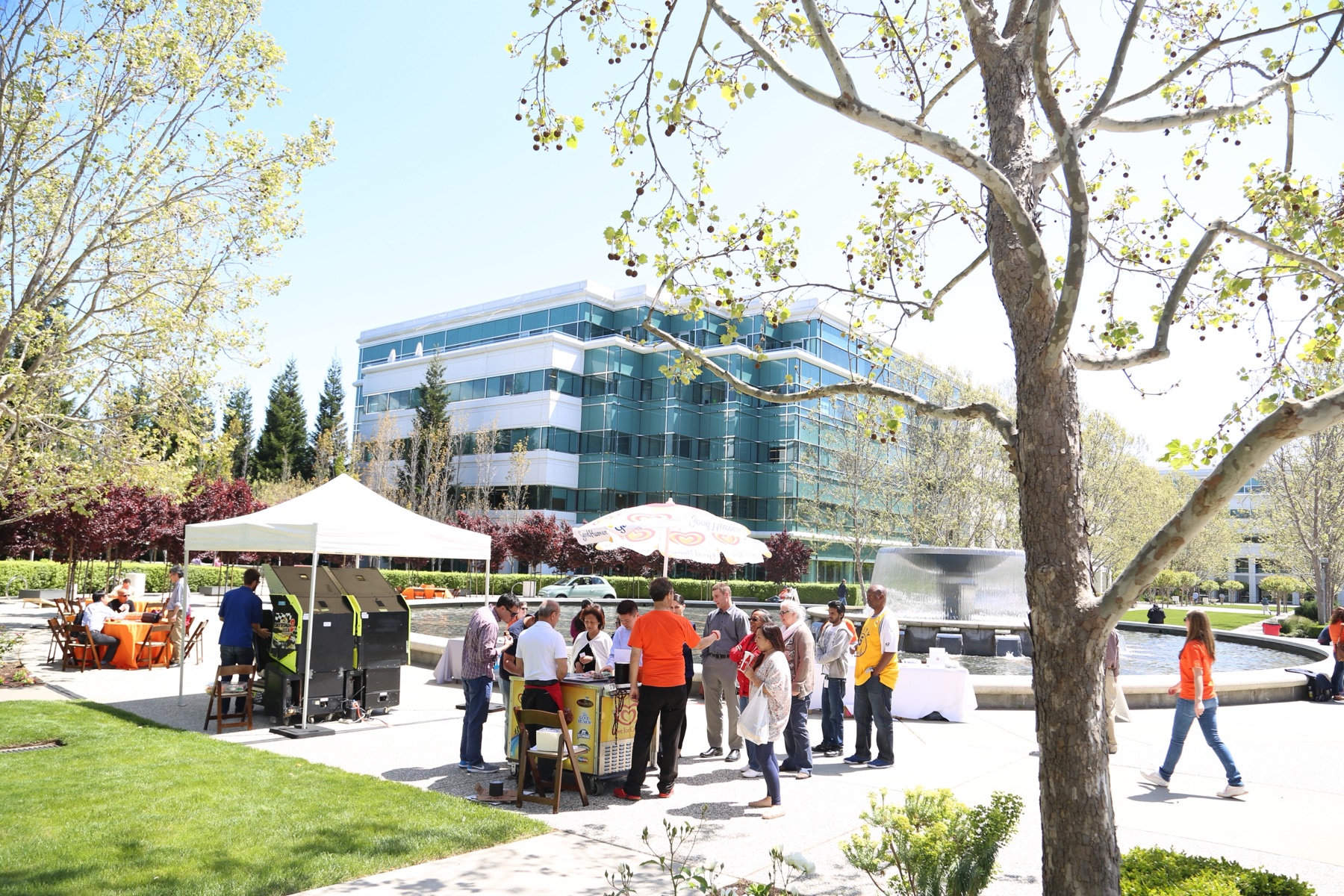
Bishop Ranch is a large business park in California's East Bay. In 2017 it became the first place GoCarma's dual-mode (commute + carshare) corporate program ran in the field. The lessons from this site shaped the Toyota deployment, and the architecture is the one the Driving Wallet runs on today.
The wallet handles hundreds of thousands of monthly verifications, audit-grade trip data, and privacy-by-design data flows. The same software that lets Texas DOT trust an HOV verification is the same software that lets your CFO trust an emissions report.
When a large employer announces a new campus in a city, the traffic conversation arrives first. Residents organize. Council questions density. State environmental review demands a credible mitigation. The campus doesn't open — or opens with parking caps — until someone can prove the employer will shift its workforce away from drive-alone commuting, year on year, at scale. The Driving Wallet is the only system that proves it.
Council and planning commission grant entitlement on the condition that the employer's workforce hits a measurable drive-alone reduction within 24 months — and stays there. Without verification, the commitment is a promise on paper. With Carma, the city sees real, audited trip-level data every quarter.
The reward budget — channeled to employees through a virtual card — is small next to the cost of a parking structure, a delay in entitlement, or a downsized campus. The wallet turns a CSR/ESG line item into a development-approval lever. The CFO funds it. The community-affairs lead defends it.
Trip-level mode classification on every enrolled employee, every week, for the full term of the agreement. Defensible to planning staff, defensible to the auditor, defensible in a community lawsuit. The same software that runs DFW HOV verification underwrites the campus's social licence to operate.
A Community Benefit Agreement, made real. This is the pattern Amazon HQ2 needed and didn't have. It's the pattern Apple Park needed and didn't have. It's the pattern every new corporate campus needs — and now it exists.
A new campus announcement always brings the same story: lots of jobs, lots of growth — and lots of new cars on roads the existing community already drives. The employer is the new neighbour. CSR done well means the employer pays its share of the cost it's adding. The wallet is how you write the cheque to the right people, verifiably.
Employer reimburses the verified toll on every carpool trip across the corridor — for employees and nearby residents who opt in. The wallet sees the carpool verification, the toll system sees the credit. The community sees a measurable benefit, not a press release.
Weekly reward for verified trips taken by transit, bike, walk, or carpool instead of drive-alone. Same enrolment for employees and for community members in the campus catchment. Verified by the wallet's six-mode classification, settled by virtual card.
Employer-funded monthly transit pass for anyone — employee or neighbour — who uses it on the corridor that serves the campus. The wallet verifies usage, the transit agency receives the funded pass, the community gets transit infrastructure paid for by the source of new demand.
One-time bonus on day-zero of campus opening for anyone — employee or commuter on the affected roads — who registers a verified mode-shift trip during the first month. Front-loads the behaviour change at the moment the community pressure is highest.
Every existing TDM program in the U.S. rewards employees only. That's a fundamental limit on the size of the impact — and a fundamental limit on the political utility of the program. The wallet doesn't care who you employ. It verifies a trip the same way for an employee and for a neighbour. When Amazon, Microsoft, or any big-campus employer funds a "we'll pay your tolls if you carpool" program open to the community on the affected corridors, the headlines change from "new campus = new traffic" to "new campus = new mobility benefit for residents." That's CSR with a measurable outcome — and the wallet is the only system that makes it auditable.
If your worksite has 250 or more employees and sits in the South Coast Air Quality Management District — the LA Basin, Orange County, Riverside, San Bernardino — Rule 2202 already applies to you. Every regulated worksite must operate an Employee Commute Reduction Program and either hit an Average Vehicle Ridership target or buy AQIP credits. Most ECRPs run on annual commute surveys: self-reported, low-response-rate, indefensible to an inspector. We replace the survey.
"On-Road Motor Vehicle Mitigation Options." Worksites with 250+ employees in the SCAQMD jurisdiction must operate an ECRP and meet an AVR target — or buy AQIP credits at significant cost. Millions of California employees fall under it.
Most ECRPs run on a once-a-year commute survey emailed to all employees. Response rates have been falling for a decade. Self-reported data is unverifiable. Inspectors know it. EHS and Sustainability teams know it. It is the weakest evidence in the entire compliance stack.
Continuous, verified, audit-ready trip data — every employee, every day, every mode. Drive-alone vs. carpool vs. transit vs. walk vs. bike vs. telework, classified on the phone, defensible to an SCAQMD inspector. We export ECRP-compatible logs and AVR-relevant data; your filing remains your filing.
Less program, not more. The employer no longer chases survey response rates or defends survey numbers to an inspector. Employees stop getting survey emails — they get paid for the commute behaviour they were already doing.
Most enterprise pilots can be designed, scoped, and running within a single quarter. The work is mostly on our side — your team needs an hour for kickoff, an hour for results, and to nominate the buyer of the reward.
No new hardware to install. No new vendor to integrate. The wallet runs on the phones your employees already carry, and rewards cash out instantly to a virtual card the employee can use immediately — or held for corporate approval, if your program rules require it.
GoCarma Enterprise is led end-to-end by Paul Steinberg, our Chief Business Officer and co-founder.
Parking-constrained campuses · new-campus CSR / community VMT offset · SCAQMD Rule 2202 ECRP compliance.